10 countries with the largest gold reserves in the world
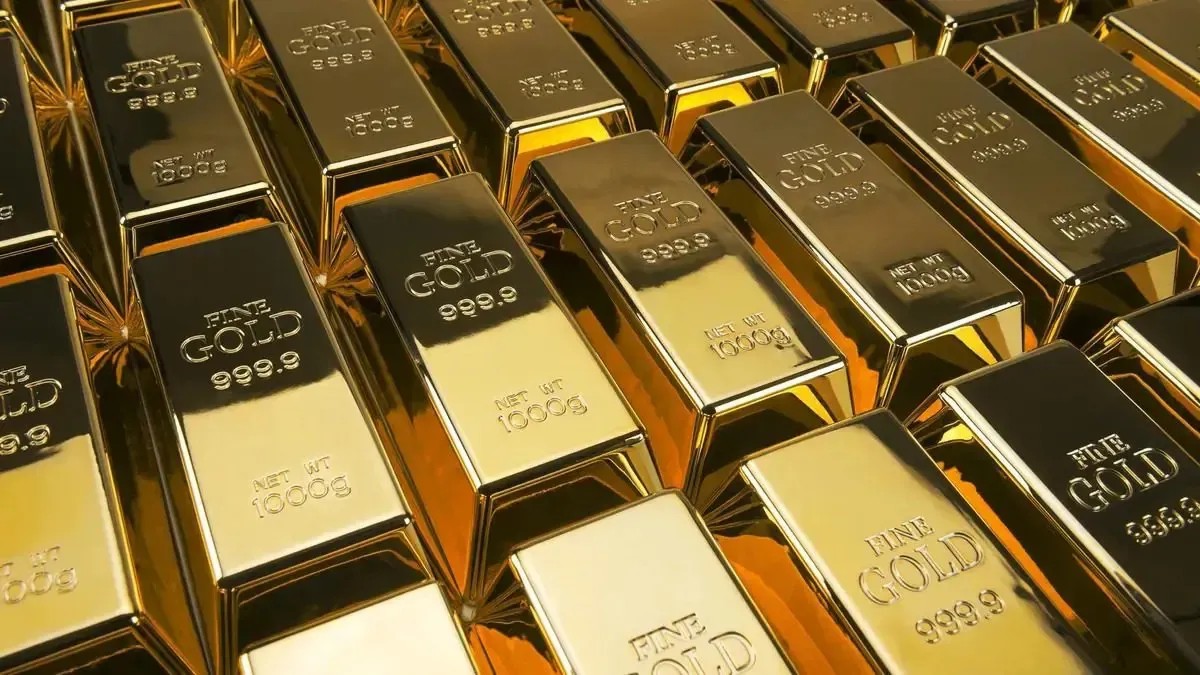
Gold has been the ultimate store of value for thousands of years. Today, central banks around the globe hold billions of dollars' worth of gold as a financial safety net — a shield against inflation, currency devaluation, and geopolitical uncertainty. In 2025, gold prices surged past $4,300 per ounce, marking record highs driven by global tensions and a wave of central bank buying not seen in decades.
So which countries hold the most gold? This guide ranks the 10 countries with the largest gold reserves in the world, with verified data from the World Gold Council and the IMF, and explains why each nation holds so much of the precious metal.
Why Do Countries Hold Gold Reserves?
Before diving into the rankings, it helps to understand why governments stockpile gold at all:
Hedge against inflation: Gold holds its value when fiat currencies weaken.
Currency stabilisation: Countries with large gold reserves can defend their currencies during economic crises.
Geopolitical security: Gold is a politically neutral asset — unlike US Treasury bonds, it carries no counterparty risk.
Diversification: Central banks use gold to reduce dependence on any single currency, especially the US dollar.
Confidence signal: Large gold reserves reassure investors and trading partners of a country's financial strength.
Since 2010, central banks globally have been net buyers of gold, and the past three years have seen purchases exceed 1,000 tonnes per year — the highest sustained buying pace in modern history.
1. United States — 8,133 tonnes
The United States holds more gold than any other country on Earth — by a very wide margin. Its 8,133 tonnes account for more than a quarter of all official gold reserves worldwide and represent roughly 74% of the country's total foreign reserves, the highest gold allocation of any major economy.
The bulk of US gold is stored at Fort Knox in Kentucky (approximately 4,580 tonnes), with the rest held at the Federal Reserve Bank of New York and the Philadelphia Mint. These holdings have remained virtually unchanged for decades, reflecting a deliberately stable, conservative reserve policy.
The United States' massive gold stockpile is deeply intertwined with the US dollar's status as the world's reserve currency. Even after the gold standard was abandoned in 1971, Washington retained its gold hoard as a symbol of financial credibility and monetary strength.
Key fact: The US holds more gold than Germany and Italy combined.
2. Germany — 3,352 tonnes
Germany is the second largest gold holder in the world and the largest in Europe. Its vast reserves reflect decades of post-war economic discipline and the historical emphasis on financial stability embedded in German monetary policy.
For many years, a significant portion of Germany's gold was stored abroad — mainly in the United States and France — as a Cold War-era security measure. Over the past decade, Germany undertook a high-profile repatriation programme, moving thousands of tonnes back to vaults at the Deutsche Bundesbank in Frankfurt. The exercise was completed ahead of schedule, in 2017.
Germany's gold represents around 74% of its total foreign reserves, reflecting how central gold is to the country's reserve strategy.
Key fact: Germany's gold holdings are the highest per capita of any major world economy, at about 40 grams per person.
3. Italy — 2,452 tonnes
Italy holds the third largest gold reserve globally, a position it has maintained for decades. The Banca d'Italia (Bank of Italy) stores its gold both domestically and in vaults in the United States and the United Kingdom.
Italy's gold holdings are particularly notable given the country's challenging public finances. Gold constitutes roughly 68% of Italy's total reserves, making it one of the most gold-heavy reserve portfolios in the world. This high proportion has occasionally sparked political debate inside Italy about whether the reserves could or should be used to address government debt.
Key fact: Italy's gold reserves are valued at well over $350 billion at current prices — a significant national asset.
4. France — 2,437 tonnes
France holds approximately 2,437 tonnes of gold, barely behind Italy and securing the fourth spot globally. The Banque de France manages these reserves, which are stored predominantly in underground vaults beneath the streets of Paris – known colloquially as "La Souterraine".
Like Germany and Italy, France has maintained its gold reserves as a cornerstone of its financial sovereignty for generations. France was historically one of the loudest advocates for the gold standard, and that legacy endures in its reserve philosophy today.
Key fact: Gold accounts for around 70% of France's total foreign exchange reserves.
5. Russia — 2,327 tonnes
Russia's central bank spent much of the 2010s on an aggressive gold-buying programme, purchasing hundreds of tonnes each year in a deliberate strategy to reduce dependence on the US dollar and build a financial buffer against Western sanctions. At its peak, Russia was the world's largest annual purchaser of gold.
Following the full-scale invasion of Ukraine in 2022 and the resulting sanctions, Russia's gold reserve management has become more complex. Notably, Russia has been selling physical gold from its National Wealth Fund on the domestic market to maintain liquidity. As of late 2025, total official reserves stand at approximately 2,327 tonnes, though the portion held in the National Wealth Fund has declined.
Key fact: Gold makes up roughly 29% of Russia's total foreign reserves — a deliberate buffer built to withstand financial sanctions.
6. China — ~2,306 tonnes
China is the world's largest gold producer and one of its fastest-growing official holders. The People's Bank of China has added more than 350 tonnes to its reserves between 2019 and 2024 alone, as part of Beijing's long-running effort to reduce reliance on the US dollar and strengthen the global standing of the yuan (renminbi).
Despite the impressive total, gold accounts for only around 4–5% of China's enormous foreign exchange reserves — far below the proportions seen in Western central banks. Many analysts believe China's true gold holdings could be significantly larger than officially reported, given the strategic opacity around its reserve disclosures.
Key fact: China is the world's largest gold miner yet imports vast additional quantities to build its official stockpile.
READ MORE: How to save money as a student in Ghana
7. Switzerland — 1,040 Tonnes
Switzerland's gold reserves are remarkable given the country's small population of just 8.5 million people. Holding over 1,040 tonnes, Switzerland has one of the highest per capita gold holdings of any country on earth — roughly 120 grams per person.
The Swiss National Bank (SNB) manages these reserves as part of a broader strategy of financial neutrality and stability. Switzerland famously sold around 1,300 tonnes of gold in the early 2000s, following a popular referendum, but has maintained its current holdings stable for the past two decades.
Key fact: Switzerland's gold holdings per capita are among the very highest in the world, reflecting its unique role as a global financial safe haven.
8. India — ~876 Tonnes
India has been one of the most active central bank gold buyers in recent years. The Reserve Bank of India (RBI) has added over 200 tonnes to its reserves since 2020, bringing total holdings to approximately 876 tonnes — placing India firmly in the global top ten.
India's relationship with gold runs deeper than central bank policy. The country's households and temples collectively hold an estimated 25,000 tonnes of privately owned gold — one of the largest accumulations of private gold anywhere in the world. For Indians, gold is woven into culture, tradition, and savings behaviour.
In a notable development, India has been repatriating its gold from storage at the Bank of England back to domestic vaults, with the first batch of 100 tonnes returned in May 2024 — a sign of growing confidence in domestic storage capabilities.
Key fact: India's private gold holdings dwarf even its central bank reserves, making the country one of the world's largest gold-holding nations in total terms.
9. Japan — 846 tonnes
Japan holds 846 tonnes of gold in its official reserves, making it the ninth largest holder globally. Unlike China, India, or Russia, Japan has not been actively expanding its gold reserves in recent years — its holdings have remained relatively stable.
Historically, Japan used a portion of its gold reserves to help stabilise its economy in the aftermath of the 2011 Fukushima nuclear disaster, which dealt a severe blow to economic output and required major financial intervention.
Gold represents just around 3% of Japan's total foreign exchange reserves — a notably low proportion for such a wealthy country — because Japan holds enormous quantities of US dollar-denominated assets and other foreign currencies.
Key fact: Despite being the world's third-largest economy, gold constitutes a relatively small share of Japan's total reserves.
10. Turkey — ~570 Tonnes
Turkey rounds out the top ten with approximately 570 tonnes of gold. The country has faced persistent currency pressures over the past several years, with the Turkish lira losing significant value against major currencies. In response, the Central Bank of the Republic of Turkey has used gold as an economic stabiliser and buffer.
Turkey's gold reserve figures are somewhat unique because they include gold held on behalf of commercial banks — a domestic policy that allows Turkish banks to meet reserve requirements using gold rather than cash. This inflates the headline figure compared with the pure central bank holdings seen in other countries.
Key fact: Turkey was one of the most active gold buyers among central banks between 2020 and 2025, using gold as a hedge against the lira's depreciation.
Edem Kwame
Edem Kwame is a journalist at GH News Media covering business and national developments in Ghana.