How cricket became the world's most-searched sport
It started with a bat, a ball, and a billion fans who refuse to look away.
Cricket was never supposed to conquer the internet. It is a sport that can last five days. It has rules that confuse outsiders. It is played in a relatively small number of countries compared to football. And yet, when Google released its search data for 2025 and early 2026, cricket sat at the very top — the single most-searched sport on the planet.
So how did a game born on English village greens in the 18th century become the internet's most dominant sport? The answer involves one billion Indians, a revolution in short-format cricket, and the most expensive sports broadcast deal outside of American football.
The numbers don't lie.
In April 2026, data from Similarweb confirmed what cricket fans already knew — "IPL" was the most searched query on Google worldwide, pulling in approximately 608 million searches in a single month. Not a celebrity. Not a news event. A cricket tournament.
Google's own Year in Search report for 2025 told a similar story. The Asia Cup, the ICC Champions Trophy, and the ICC Women's Cricket World Cup ranked second, third, and fourth among the most-searched sporting events globally. Two Indian Premier League teams — Punjab Kings and Delhi Capitals — broke into the top five most-searched sports teams in the world.
Cricket now has an estimated 2.5 billion fans worldwide, making it the second most-followed sport on earth behind football. But in terms of Google search volume, it is fighting for the number one spot.
India is the engine.
No conversation about cricket's digital dominance is complete without talking about India. The country has a population of over 1.4 billion people, the majority of whom treat cricket not just as a sport but as a shared national identity.
India's relationship with cricket goes back to 1721, when the first recorded match was played on Indian soil. By 1932, India had joined the elite club of Test-playing nations. When India defeated England in 1952 for the first time, it was more than a sporting result — it was a statement. From that point, cricket became woven into the fabric of everyday Indian life in a way few sports have managed anywhere in the world.
READ MORE: Chelsea agree four-year deal with Xabi Alonso
Today, India generates more cricket revenue than every other country combined. The Indian Premier League, launched in 2008, sold its broadcasting rights for $6.2 billion over five years — one of the most valuable sports media deals on the planet. Each IPL season runs for roughly two months and features the world's best players in a fast, explosive format designed for the modern viewer. It is impossible to overstate its impact.
When India plays Pakistan in any format, search traffic doesn't just spike — it overwhelms. The 2022 T20 World Cup match between the two sides drew 300 million concurrent viewers globally. That is not a misprint.
T20 Changed Everything.
Cricket in its traditional Test match format was never going to win the internet age. Five-day matches, complex scoring, and long pauses don't suit an era of 60-second videos and constant notifications.
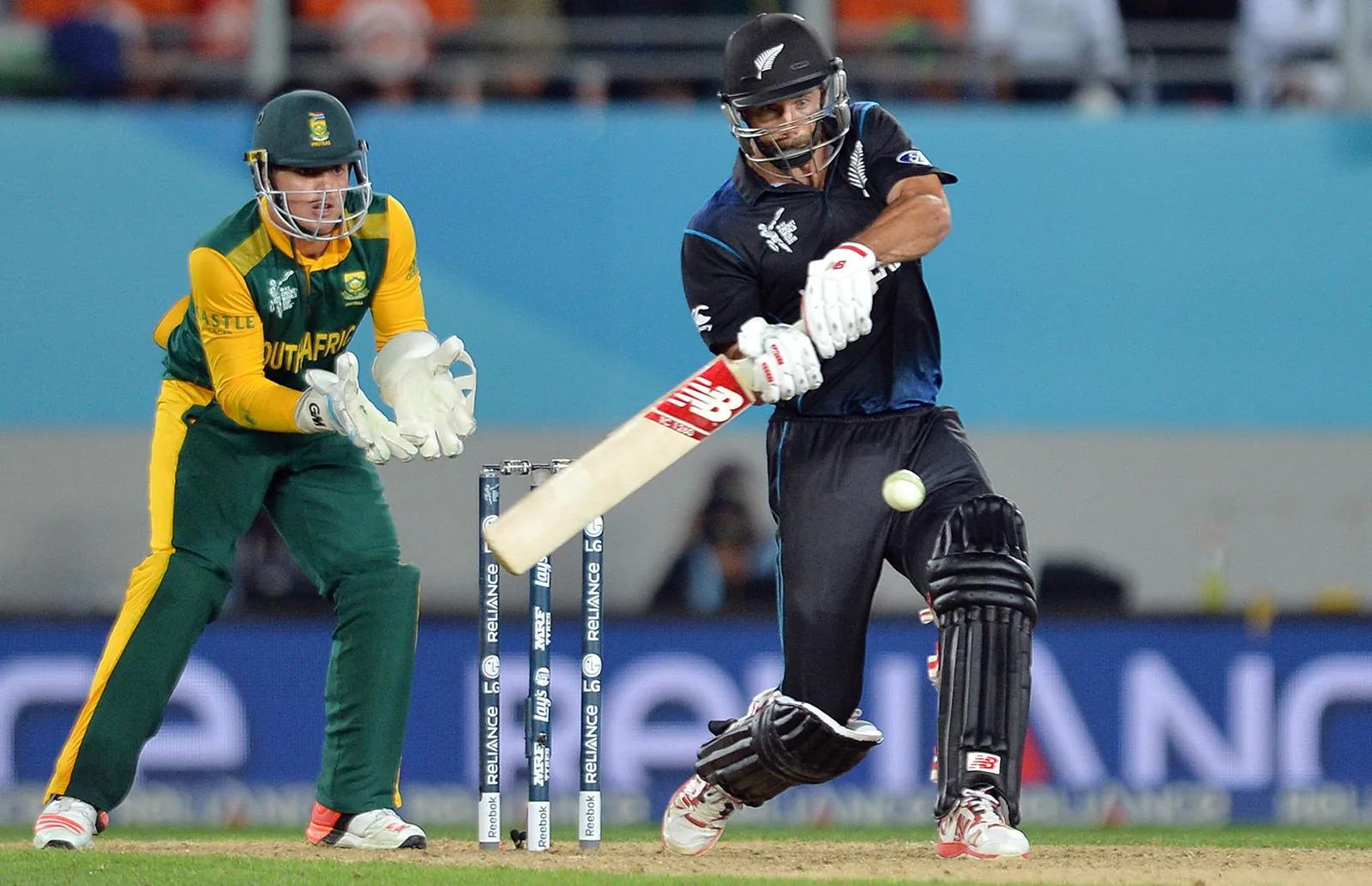
Then came T20 cricket — a three-hour, high-scoring, fireworks-at-the-boundary format that changed what the sport could be. The ICC launched the T20 World Cup in 2007. Within a decade, franchise leagues had sprung up across the world. The IPL led the way, followed by leagues in Australia, the Caribbean, Pakistan, South Africa, England, and the United States.
The 2023 Cricket World Cup, held in India, attracted over 1.25 billion viewers worldwide across television and digital platforms — shattering every previous record. The 2023 tournament also generated 18.9 billion social media impressions, a number that reflects just how deeply cricket fans engage with the sport online.
Cricket Is Going Global
For most of its history, cricket was a sport played in countries once part of the British Empire — England, Australia, India, Pakistan, the West Indies, South Africa, Sri Lanka, Bangladesh, Zimbabwe, and New Zealand. That geography is now expanding.
The United States has seen a 300% growth in cricket participation and viewership since 2020, driven by South Asian and Caribbean immigrant communities and increased media investment. The ICC awarded the 2024 T20 World Cup co-hosting rights to the USA, and games were played in New York and Florida to sold-out crowds.
Afghanistan, a nation that barely had an organised cricket structure two decades ago, now regularly competes against the sport's biggest teams. Nepal, Ireland, Scotland, and the Netherlands are growing their programmes. The ICC currently has 104 member nations.
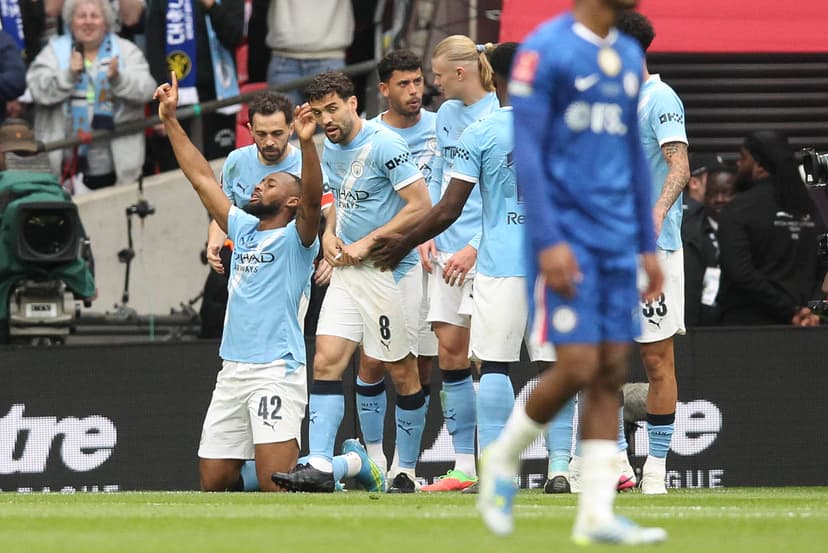
READ MORE: Semenyo fires Manchester City to FA Cup glory against Chelsea
And then there is the biggest milestone yet: cricket is returning to the Olympics at the 2028 Los Angeles Games for the first time since 1900. The exposure that comes with an Olympic debut — reaching audiences who have never watched a ball bowled — could be the moment that finally takes cricket global in every sense.
The Face of It All
Behind every search trend is a human being people want to follow. In cricket's case, that is Virat Kohli.
The Indian batting star has 377 million combined followers across Instagram, Facebook, and X — the largest of any active cricketer and one of the largest of any sportsperson on earth. Google Trends data consistently ranks him as the most-searched cricketer globally. He is not just a player; he is a one-man media industry who has helped carry cricket's digital profile to heights no administrator could have planned.
Why It's Not Slowing Down
Cricket's rise on Google is not a spike — it is a sustained climb. The IPL runs every year. The ICC calendar features a major tournament almost every few months. T20 leagues now operate year-round across multiple continents, meaning cricket is always in season somewhere.
Younger fans are engaging with cricket differently too — through short video clips, fantasy cricket apps, and social media commentary rather than sitting through full matches. Platforms like YouTube and Instagram have become as important to the sport's growth as television.
The search data is simply a reflection of all of this. People are watching more cricket, talking about cricket more, and looking up cricket more than any previous generation. The sport that took 300 years to leave England has, in the last two decades, managed to capture the attention of the world.
Whether you understand the LBW rule or not, you have almost certainly seen cricket trending. That is not an accident. It is the result of a sport that found exactly the right moment to evolve.
Cricket is played in over 120 countries. The ICC has 104 member nations. The 2028 Los Angeles Olympics will feature T20 cricket for the first time in over a century.
Edem Kwame
Edem Kwame is a journalist at GH News Media covering sports and national developments in Ghana.