Why Nnamdi Kanu was sentenced to life imprisonment
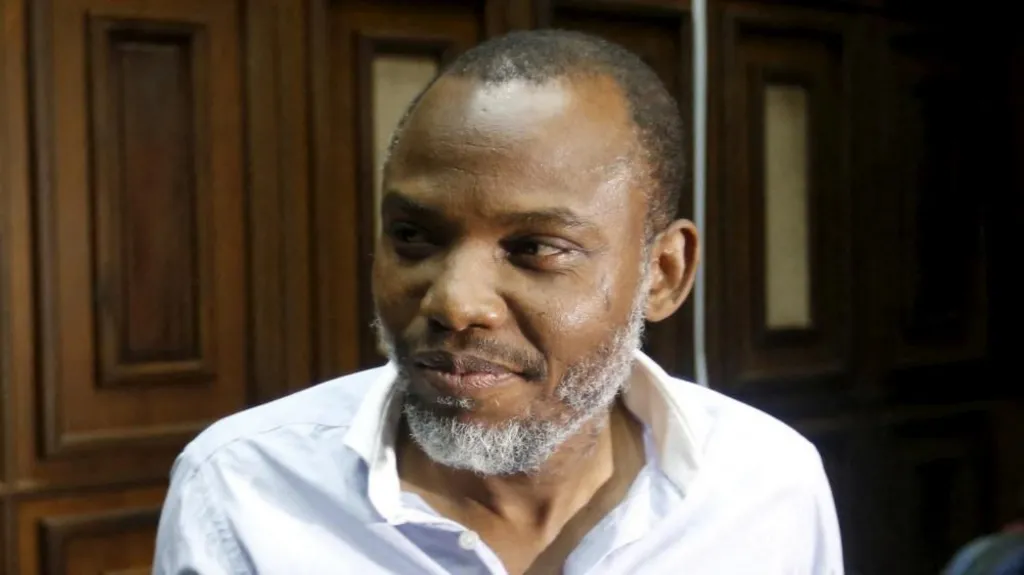
Nnamdi Kanu, leader of the Indigenous People of Biafra (IPOB), was sentenced to four life imprisonment terms after a Nigerian court found him guilty of terrorism, treason, and involvement with an outlawed organisation. The verdict marks the end of a turbulent, decade-long legal battle centred on separatist agitation, violent broadcasts, and unlawful activities linked to his movement.
1. Inciting Violence Through Broadcasts
Central to the court’s ruling were a series of inflammatory broadcasts made by Kanu on Radio Biafra, a station he founded in 2009.
Judge James Omotosho concluded that these broadcasts:
Encouraged killings
Provoked violence
Threatened national security
Contributed to unrest in southeastern Nigeria
The judge said he was “satisfied” that Kanu used his platform to mobilise followers toward violent acts in pursuit of a separate Biafran state.
2. Terrorism and Treason Charges
Kanu was convicted on all seven charges, including:
Terrorism
Treasonable felony
Membership and leadership of an outlawed group
Inciting violence
Terror-related activities linked to IPOB’s armed wing, the Eastern Security Network (ESN)
The ESN has been accused of killings, attacks on security forces, and destruction of public infrastructure in recent years. IPOB itself was designated a terrorist organisation in 2017.
READ MORE: Anti-immigrant protests turn violent across South Africa
3. Leadership of an Outlawed Movement
Kanu founded IPOB in 2014 to pursue Biafran independence.
The movement gained massive followership in the southeast, but its activities—particularly those of ESN—became increasingly militant.
The court ruled that Kanu, as the ideological and operational head, was directly responsible for IPOB’s escalated violence.
4. Bail Jumping and Re-arrest
His legal history also influenced his sentencing:
Arrested in 2015
Jumped bail in 2017 after a military raid on his residence
Fled the country
Re-arrested in 2021, allegedly kidnapped in Kenya and forcibly returned (a claim Kenya has not commented on)
The court cited his conduct as evidence of disregard for Nigerian law.
5. Courtroom Misconduct
During the trial, Kanu:
Fired his legal team
Challenged the court’s jurisdiction
Refused to defend himself
Disrupted proceedings repeatedly
He was forcibly removed from the courtroom before the final judgement for unruly behaviour, and the verdict was delivered in his absence.
READ MORE: GNFS rescues 479 people as floods, fires and building collapse hit Accra and Tema
6. Supreme Court Intervention and Legal Reinstatement
In 2022, an appeal court ordered all charges dropped on grounds that his extradition was illegal.
However, in 2023, the Supreme Court reversed that ruling, reinstating the charges and clearing the way for the terrorism trial to continue.
7. Death Penalty Rejected
Prosecutors had pushed for a death sentence, arguing that Kanu’s broadcasts and leadership caused significant loss of life.
Judge Omotosho, however, noted that executions are now “frowned upon”, choosing instead multiple life sentences to run concurrently.
8. Historical and Political Context
The push for Biafran independence dates back to the 1967–1970 civil war, which claimed up to one million lives.
Many Igbo people still feel politically and economically marginalised, and Kanu’s message gained resonance in the region.
However, the reaction to his conviction has so far been muted, possibly due to fatigue from years of conflict, fear of a state crackdown, or divided public opinion on Biafran independence.
Summary
Nnamdi Kanu received life imprisonment because the court found that:
He incited violence and killings through orchestrated broadcasts.
He led a banned terrorist organisation.
He engaged in treasonable activities against the Nigerian state.
He influenced armed operations linked to killings and destruction.
He exhibited a consistent pattern of law evasion and courtroom misconduct.
This ruling is likely to have major implications for separatist movements, national security, and political stability in Nigeria’s southeast.
Edem Kwame
Edem Kwame is a journalist at GH News Media covering news and national developments in Ghana.