Top 10 most dangerous prisons in the World
Prisons exist to punish, rehabilitate, and protect society — but some facilities across the globe have become places of extraordinary brutality, squalor, and death. These ten prisons are notorious not just for the criminals they hold but also for the conditions and violence that define life inside their walls.
1. Black Dolphin Prison — Sol-Iletsk, Russia
One of Russia's most brutal maximum-security facilities, Black Dolphin holds the country's worst offenders — serial killers, cannibals, and terrorists. Named after a sculpture made by inmates, the prison enforces 22-hour daily lockdowns and requires prisoners to walk bent at a 90-degree angle with eyes fixed to the ground whenever outside their cells. Psychological torture is systematic: inmates are never left unobserved, and any social interaction is tightly controlled. Escape is considered impossible.
2. Camp 14 (Kaechon Internment Camp) — South Pyongan Province, North Korea
Camp 14 is a total-control zone — a political prison camp that holds entire families of those deemed enemies of the North Korean state. Inmates are born into the camp and know no other life. Survivors describe forced labour from childhood, routine public executions, starvation, and sexual violence by guards. There are no trials, no release dates, and no outside contact. Shin Dong-hyuk, the only known person born inside and to have escaped, described conditions that shocked international human rights organisations.
3. ADX Florence (Supermax) — Colorado, USA
Known as the "Alcatraz of the Rockies", ADX Florence is America's only federal supermax and its most secure facility. Inmates spend 23 hours a day in a concrete cell roughly the size of a parking space. Human contact is near zero. Notable prisoners include Unabomber Ted Kaczynski, 9/11 conspirator Zacarias Moussaoui, and Boston Marathon bomber Dzhokhar Tsarnaev. Critics and former prisoners argue that the conditions constitute psychological torture — many inmates develop severe mental illnesses. No one has ever escaped.
READ MORE: Man arrested for reportedly writing BECE for his girlfriend
4. La Sabaneta Prison — Maracaibo, Venezuela
Widely regarded as one of the most violent prisons on earth, La Sabaneta is effectively run by inmate gangs — guards rarely enter the cell blocks. Built for 700 prisoners, the facility has held over 3,700 at its peak. Riots are frequent and deadly: a single massacre in 1994 killed 108 people. Inmates manufacture weapons inside, control food and water distribution, and operate drug markets openly. The Venezuelan state has little functional authority within its walls.
5. Ciudad Barrios Prison — San Miguel, El Salvador
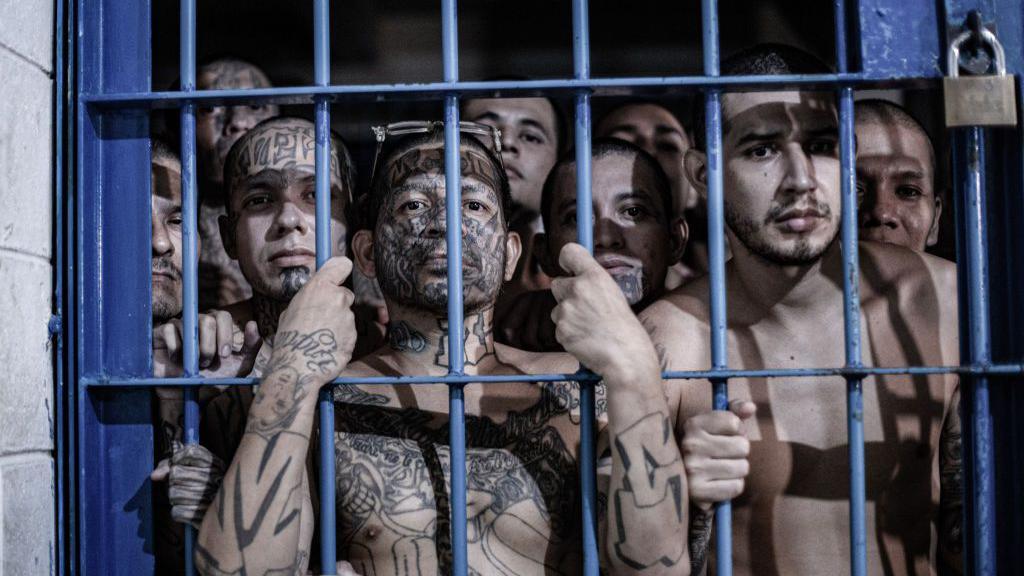
Ciudad Barrios is a prison almost entirely controlled by the MS-13 gang — not a mixed population, but a facility housing thousands of MS-13 members that effectively became a command centre for gang operations across Central America. Gang leaders ran criminal networks from inside, issuing orders for murders and extortions on the outside. The Salvadoran government eventually launched sweeping crackdowns beginning in 2022, transferring tens of thousands of gang members to the newly built CECOT mega-prison.
6. Gitarama Central Prison — Gitarama, Rwanda
In the aftermath of the 1994 Rwandan genocide, Gitarama Central Prison became one of the most inhumane places on earth. A facility built for 400 people was packed with over 7,000 prisoners awaiting genocide trials. Inmates had no space to sit or lie down and stood on waterlogged floors for weeks. Gangrene spread as feet rotted in the sewage. Starvation was rampant. International observers documented deaths from disease, suffocation, and violence daily. The conditions were described as among the worst ever witnessed by human rights workers.
7. Bang Kwang Central Prison — Nonthaburi, Thailand
Nicknamed the "Bangkok Hilton", Bang Kwang is Thailand's most notorious maximum-security facility and is infamous among foreign prisoners for its brutal conditions. Death row inmates spend their first three months in leg irons. The facility is severely overcrowded and understaffed. Executions were carried out by machine gun until 2003, when lethal injection was introduced. Foreign nationals — many convicted on drug charges — make up a significant portion of the population, and access to legal counsel is limited.
READ MORE: Man killed, another injured in violent fight over a woman
8. Guantánamo Bay Detention Camp — Cuba (US territory)
Opened in 2002 following the September 11 attacks, Guantánamo Bay became a symbol of extra-judicial detention and alleged torture. Detainees — many held without charge or trial for years, sometimes decades — reported waterboarding, sleep deprivation, sensory manipulation, and religious humiliation. At its peak it held nearly 800 prisoners. International human rights bodies, the United Nations, and even some U.S. officials have condemned its practices. As of 2024, around 30 detainees remain, some for over 20 years without conviction.
9. La Modelo Prison — Bogotá, Colombia
La Modelo is Colombia's most dangerous prison and one of the most violent in Latin America. For decades it was divided into territories controlled by rival paramilitary groups and drug cartel factions. Massacres between factions were not uncommon — a 2000 riot left more than 30 dead. Corruption is systemic: weapons, drugs, and mobile phones flow freely inside. Overcrowding has consistently sat at more than double official capacity, and gang power within the prison remains entrenched.
10. Carandiru Penitentiary — São Paulo, Brazil
Once South America's largest prison, Carandiru is best remembered for the 1992 massacre in which military police shot and killed 111 inmates while suppressing a riot — most were executed in their cells. Before its demolition in 2002, the facility housed over 7,000 people in a space designed for 3,250. HIV infection rates were among the highest of any prison in the world. The PCC crime syndicate rose to power within its walls, and the 1992 massacre became a defining moment in Brazilian human rights history.
Edem Kwame
Edem Kwame is a journalist at GH News Media covering news and national developments in Ghana.