A modern-day “Ark Builder”? The story of Ebo Noah, his doomsday prophecy, and what scripture really says
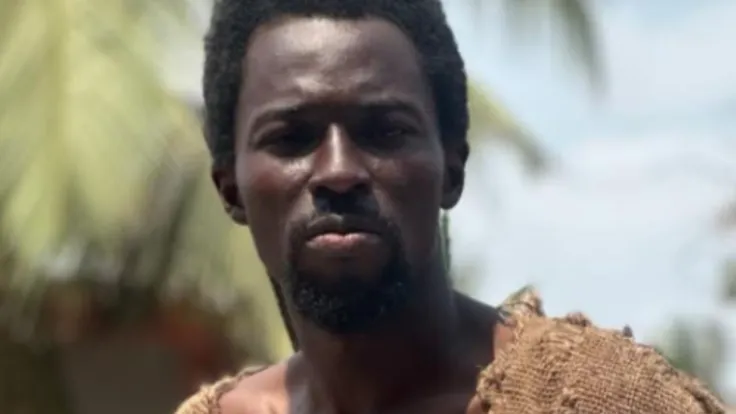
What began as a few viral clips of a man cutting timber in a dusty field in Ghana has grown into a global social-media phenomenon. Self-styled prophet Ebo Noah has claimed that God revealed to him that the world will end on Christmas Day 2025. In response, he says he has constructed eight massive wooden arks to rescue a select group of people from an imminent worldwide flood.
The scale of his claims has attracted intense curiosity, scepticism and debate—locally and internationally.
The Prophecy He Claims Came From God
Ebo Noah states that his mission began after a vivid dream in which God showed him unending rain beginning on 25 December 2025 and continuing for several years. He describes visions of submerged cities, collapsing nations and people seeking refuge as the earth becomes overwhelmed by water. According to him, this event is a repetition of the biblical flood recorded in Genesis, and he believes he has been commanded to build arks to preserve a remnant of humanity and repopulate the earth afterward.
He says construction is almost complete and insists that a divine timetable is guiding every stage.
The Arks That Ignited Global Attention
Footage of huge wooden structures—some resembling ship hulls—has drawn millions of views online. Videos show stacks of timber, crowds of followers praying, and carpenters working rapidly. Ebo Noah claims that each ark contains more than 250,000 uniquely selected wooden boards, all chosen according to instructions he says came directly from God.
The story has become one of the most virally discussed topics of the year. Visitors have travelled to Kumasi to inspect the structures for themselves, while online users remain divided over whether the arks are genuine, exaggerated or digitally manipulated. Across TikTok, Facebook and Instagram, his following has surged to more than 380,000—ranging from supporters to sceptics to people simply intrigued by the spectacle.
READ MORE: Anti-immigrant protests turn violent across South Africa
Claims of Animals and Followers Gathering
Ebo Noah also asserts that animals have begun arriving at the construction site on their own—showing videos of goats and birds he describes as “signs of fulfilment.” He declares that the arks will carry two of every species, along with chosen individuals who believe his message.
His followers regularly appear in his videos, engaging in prayers, chants and community gatherings. Some view him as a prophet appointed for the end times; others accuse him of deception or delusion.
A Biblical Lens: What Does Scripture Actually Say?
Ebo Noah’s narrative mirrors the story of Noah in Genesis 6–9, but the Bible provides clear guidance on evaluating such prophecies.
1. The Bible says no one knows the exact date of the end.
Jesus states plainly:
“But about that day or hour no one knows… only the Father.” (Matthew 24:36)
Any prophecy that assigns a specific date to the world’s end directly contradicts Scripture.
2. The flood in the Bible was a one-time covenant event.
After the Genesis flood, God made a covenant with humanity:
“Never again will all life be destroyed by the waters of a flood.” (Genesis 9:11)
This promise means that a second global flood is not a biblically supported event.
READ MORE: GNFS rescues 479 people as floods, fires and building collapse hit Accra and Tema
3. Prophets are tested by truth, not spectacle.
Deuteronomy 18:22 instructs believers to evaluate any prophetic message by whether it comes to pass. Biblical discernment focuses on truth, not attention or miracles.
4. The New Testament shifts focus from fear to spiritual readiness.
Rather than predicting dates, Scripture encourages moral vigilance and faithfulness (1 Thessalonians 5:1–6).
Therefore, while individuals may claim divine visions, the Bible urges caution, discernment and alignment with Scripture—not panic or adherence to unverified predictions.
Public Debate and Unanswered Questions
Despite global attention, authorities in Ghana have not issued formal comments. Scientific agencies report no evidence of any impending worldwide flood, and meteorologists emphasise that such an event is impossible in modern climate science. Religious leaders are divided: some dismiss the claims outright, while others prefer not to judge prematurely.
Yet the movement continues to grow, fuelled by social media algorithms, curiosity and the dramatic nature of the prophecy.
Waiting for Christmas 2025
For now, the unfinished arks in Kumasi stand at the centre of a worldwide online frenzy. Whether the structures are fully functional, partially symbolic or part of a social-media performance, they have succeeded in capturing global imagination.
Ebo Noah maintains that the world will soon witness the truth of his message. His followers say they are prepared. And millions of viewers across the world are watching closely—waiting to see whether this prophecy endures, collapses or fades like many before it.
Edem Kwame
Edem Kwame is a journalist at GH News Media covering news and national developments in Ghana.