Can United States of America win the war against Iran?
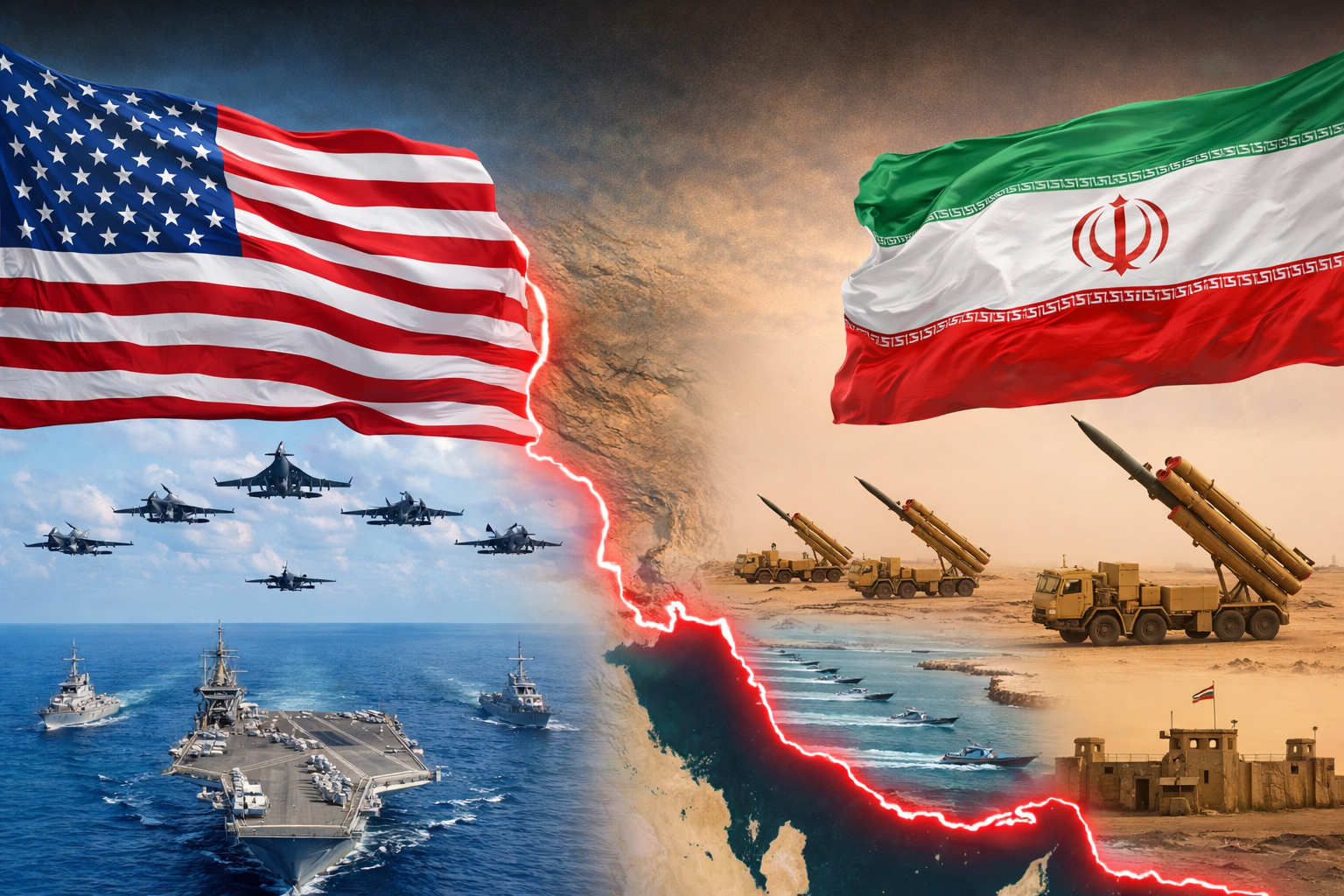
The world's most powerful military is six weeks into a new Middle East war. History suggests the answer is far from obvious.
On the morning of February 28, 2026, the United States and Israel launched nearly 900 airstrikes across Iran in under twelve hours. Supreme Leader Ali Khamenei was killed. Nuclear facilities were targeted.
The Strait of Hormuz — through which roughly 20 percent of the world's oil passes — was closed in retaliation.
Six weeks later, missiles are still flying, ceasefire talks have collapsed, and a president is threatening to bomb power plants. The world is watching, holding its breath, and asking the oldest question in warfare: can America actually win this one?
To answer that question honestly, you cannot simply look at the firepower on the table. You have to look at the record. The United States has the most expensive military in human history, spending more on defence than the next ten countries combined.
And yet when you examine the ledger of American wars fought since the Second World War — the conflicts that shaped the modern world — what you find is not a story of dominance. It is, in many respects, a story of uncomfortable ambiguity, costly stalemates, and outright defeat dressed up in the language of sacrifice.
The numbers do not lie. But they do demand context.
America’s War Record Since 1945: A Clear Breakdown
Before assessing any potential conflict with Iran, it is important to examine the United States’ military track record since the end of World War II—widely considered the last war America decisively won. What follows is a straightforward account of its major military engagements and how they ended.
The Korean War (1950–1953) concluded in a stalemate, with no clear victor despite years of intense fighting. This was followed by the Vietnam War (1965–1975), which ended in defeat after a prolonged and costly campaign.
In the early 1980s, the U.S. intervention in Beirut (1982–1984) resulted in a withdrawal, highlighting the challenges of peacekeeping in volatile regions. However, the invasion of Grenada in 1983 and the Panama invasion in 1989 were both clear victories, achieved swiftly with limited resistance.
The Gulf War (1990–1991), also known as Operation Desert Storm, stands out as a decisive victory, with U.S.-led forces successfully liberating Kuwait in a short and highly effective campaign.
In contrast, the 1993 mission in Somalia—often associated with the “Black Hawk Down” incident—ended in another withdrawal, reinforcing the difficulties of urban and irregular warfare.
The Kosovo bombing campaign in 1999 is generally viewed as a victory, as it achieved its primary objective through air power without a ground invasion.
More recently, the War in Afghanistan (2001–2021) ended in defeat, following a two-decade effort that ultimately saw the Taliban return to power. Similarly, the Iraq War (2003–2011) produced an ambiguous outcome, with initial military success overshadowed by prolonged instability.
The 2011 intervention in Libya resulted in chaos, as the removal of leadership led to ongoing instability rather than lasting peace. The ongoing war against ISIS, spanning Syria and Iraq since 2014, is considered a partial success, with territorial gains achieved but the broader threat not fully eliminated.
Now, with tensions involving Iran continuing into 2026, any potential conflict remains ongoing and uncertain.
Record: 4 clear wins | 5 defeats or withdrawals | 4 stalemates or ambiguous outcomes
The numbers, as stated, do not lie. Of the thirteen major military engagements the United States has undertaken since 1945, only four can be described as clear victories by any reasonable measure — and three of those were against countries that posed no serious military challenge. Grenada has no real army. Panama was a small Central American state.
READ MORE: Algeria U17 stage comeback to hold Black Starlets to a draw in AFCON opener
The Gulf War of 1991, the most cited American triumph, was a limited operation with a narrow mandate: remove Iraqi forces from Kuwait, then stop. It did not require occupation, reconstruction, or regime change.
By the numbers: 4 clear military victories since 1945. $8 trillion spent on post-9/11 wars alone. 20 years in Afghanistan — the longest war in US history — ending with the Taliban back in power within days of American withdrawal.
Why the Greatest Military on Earth Keeps Losing
The paradox of American military power is this: the United States wins every battle and still loses the war. This is not a new observation. It was, famously, the very thing a North Vietnamese colonel told an American officer years after the Vietnam War ended. "You won every battle," the colonel said. The American replied: "That may be true." The colonel's response: "That's irrelevant."
Military scholars and former Pentagon officials have spent decades trying to explain this gap between tactical excellence and strategic failure.
The answers they have arrived at are consistent across the generations. The United States military is extraordinarily good at destroying things: aircraft, tanks, missile batteries, and command centres.
It is much less effective at the harder task that comes after: building something that lasts.
As political scientist Dominic Tierney, author of The Right Way to Lose a War, has written, "The U.S. military can destroy anything it can see. But when it can't see the enemy, when the war becomes political, cultural, and generational – that's when the problems begin."
In Korea, American and UN forces pushed the North Koreans back but were stopped by the intervention of Chinese troops. After three years and 36,000 American deaths, a ceasefire was signed but no peace treaty.
Technically, the Korean War has never ended. The peninsula remains divided. The objective of reunifying Korea was abandoned. America calls it a draw. Most honest analysts call it something more complicated.
Vietnam is the wound that never fully healed. More than 58,000 Americans died. Hundreds of thousands of Vietnamese died — on all sides. The United States withdrew in 1973 under a peace agreement that most observers understood to be a face-saving retreat. Saigon fell to communist forces two years later. The political objective — preventing a communist South Vietnam — was completely failed.
Afghanistan took twenty years and left the Taliban back in power. The government of the United States spent two decades and nearly two trillion dollars building it, and it collapsed within days of American forces departing.
Iraq was toppled militarily in three weeks in 2003, then descended into a decade of insurgency, sectarian bloodshed, and the eventual rise of the Islamic State from the power vacuum the invasion created. Libya, where America and NATO helped remove Muammar Gaddafi in 2011 with air power and then walked away, became a failed state and a hub for human trafficking and armed militias.
The pattern is stark and consistent. American military power can change a regime. It cannot, by itself, change a country.
What Makes Iran Different — and Dangerous
Understanding America's war record is essential context. But Iran is not Vietnam, Afghanistan, or Iraq. It is both more and less dangerous, in different ways, and that complexity is what makes the current conflict so difficult to assess.
Iran in 2026 is, by many measures, a weakened state. Years of crippling economic sanctions have hollowed out its economy. The Iranian rial collapsed in value. Mass protests erupted in early 2026, the largest since the 1979 Islamic Revolution, and were suppressed with lethal force.
Iran's regional proxies – Hezbollah, Hamas, and the Houthis – have been significantly degraded by Israeli military action since 2023. Iran's own air defences and nuclear infrastructure were significantly damaged in the Israel-US Twelve-Day War of June 2025. By the time the current war began on February 28, 2026, Iran was already wounded.
The United States and Israel calculated that this weakness represented a window of strategic opportunity — that the moment had arrived to finish the job. The first wave of strikes assassinated Supreme Leader Ali Khamenei alongside dozens of senior officials and targeted nearly 900 sites in twelve hours. It was, by every technical measure, a military operation of extraordinary precision and audacity.
And yet, six weeks later, the Strait of Hormuz remains closed. Iran is still firing missiles. A US F-15E was shot down over Iranian territory, requiring a dramatic rescue operation involving Delta Force and SEAL Team Six. Iran has struck American military bases in Bahrain, Jordan, Kuwait, Qatar, Saudi Arabia, and the UAE. Ceasefire proposals have been rejected. Trump has issued deadlines and extended them. The war grinds on.
READ MORE: Pedri's penalty ritual with his father - The tradition born from a dream deferred
This is because Iran possesses something that Grenada, Panama, and even Saddam Hussein's Iraq did not: genuine strategic depth and a population that, regardless of how many citizens hate their own government, has shown throughout history a fierce resistance to foreign domination.
The 1979 revolution itself was born partly from Iranian anger at American interference in their country — specifically the CIA-backed coup that removed Prime Minister Mohammad Mosaddegh in 1953 and reinstated the shah. That history does not disappear because Washington would prefer it forgotten.
Iran is also not a small country. It has a population of 90 million people. Its geography – mountainous, vast, with rugged terrain – is exactly the kind of environment that has historically neutralised American air supremacy and forced the kind of grinding ground engagement that US public opinion cannot sustain for long. America has no appetite, and no announced plan, for a ground invasion of Iran. And without boots on the ground, the history of American airpower campaigns shows that you can destroy enormously without securing anything.
Defining What "Winning" Means Here
The question of whether America can win depends entirely on what winning means — and this is where American strategic thinking has repeatedly failed itself.
A consistent and fatal pattern runs through the post-1945 record: the United States achieved its limited, realistic military objectives, then "moved the goalposts" by expanding its war aims into territory it lacked the political will to actually achieve.
In Iraq in 2003, the military objective of toppling Saddam Hussein was achieved in three weeks. Brilliant. Then the war aims expanded to "democratising Iraq" and "transforming the Middle East" — ambitions the available forces and the available public patience could never sustain. The same pattern played out in Afghanistan.
What does the United States actually want from this war with Iran? This question has never been fully answered in public, and the ambiguity is itself a warning sign. Early stated objectives included destroying Iran's nuclear and missile programmes, achieving regime change, and reopening the Strait of Hormuz. Each of these goals presents its own problem.
Iran's nuclear infrastructure, while damaged, is not destroyed. The IAEA reported weeks into the current conflict that Iran had stored highly enriched uranium in underground facilities undamaged by the strikes. Regime change has technically occurred at the top — Khamenei is dead — but Iran still has a functioning government, a parliament, and an Islamic Revolutionary Guard Corps that continues to operate. The Strait of Hormuz, as of today, April 6, remains closed, with Iran demanding full compensation for war damages as a condition for reopening it.
The numbers tell their own story: 38 days of internet blackout in Iran — the longest national outage ever recorded. 900 US-Israeli strikes in the first 12 hours. And still, 20 per cent of the world's oil supply sits bottled up in a strait that America has not been able to reopen.
The Verdict
Any fair analysis must resist two temptations: the temptation to simply dismiss American military power as incompetent — it is anything but — and the temptation to assume that power alone decides outcomes in modern warfare.
The honest assessment is this. America will almost certainly achieve its military objectives in Iran, just as it achieved them in every previous war. It will degrade Iran's military capacity further. It may destroy additional nuclear facilities. It may maintain air superiority over Iranian skies indefinitely. These are genuine military achievements, and they are not trivial.
But the history of the past eight decades — from Korea to Vietnam, Afghanistan to Iraq, Libya to Syria — argues powerfully that military achievement and strategic victory are not the same thing. They may not even be related. A country of 90 million people with deep national identity, a coherent ideology, and the physical geography of Iran is not going to be transformed by airstrikes, however precise. It will survive them. It has survived everything before.
EDITORIAL JUDGEMENT
The United States can win battles in Iran. It has already won several. It can destroy infrastructure, kill generals, shut down nuclear sites, and demonstrate overwhelming firepower. On these narrow military terms, it is winning now.
But if winning means a stable, neutralised Iran that poses no nuclear or regional threat — the goal that would actually justify the cost of this war — then the record suggests America is unlikely to achieve it. Not because its military is weak. Because wars of this nature are not won by militaries. They are won, if they are won at all, by patience, politics, and the willingness to give the enemy something they can live with.
America has shown, repeatedly, that it lacks either the patience or the political architecture for that kind of victory. The same overconfidence that led to the Taliban returning to Kabul, to ISIS rising from the ruins of Iraq, drove the calculation that Iran's weakness in 2026 was the moment to strike. It may have been.
But weakness is not the same as submission. And submission, in the end, is the only thing that resembles victory in a war of this kind.
Our assessment: America will not lose this war in the traditional military sense. But by the measure of history — and by the measure of what actually constitutes a lasting win — it faces the same structural problem it has faced in every major conflict since 1945. It knows how to fight. It has not yet learned how to end.
Edem Kwame
Edem Kwame is a journalist at GH News Media covering features and national developments in Ghana.